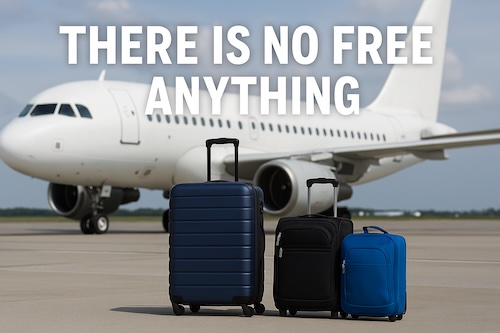
A new proposal in Brazil’s Congress aims to force airlines to include free checked and carry-on baggage in every ticket sold within the country. On the surface, it sounds like a win for travelers — who doesn’t like the word free? But as anyone familiar with airline economics knows, there’s no such thing as a free bag.
If approved, this legislation could raise fares for everyone, reduce fare flexibility, and ultimately hurt the very passengers it intends to protect.
The Illusion of “Free”
When Brazil deregulated its airline industry in the past decade, one of the biggest shifts was the introduction of à-la-carte pricing — allowing passengers to pay only for what they use. Travelers who fly light could finally buy cheaper “basic” fares without subsidizing others who check multiple bags.
This new law would eliminate that choice. Airlines would be forced to bundle baggage fees back into the base fare — meaning every traveler would pay more, even those who don’t check luggage.
The Global Reality
Around the world, unbundled pricing is the standard. From the United States to Europe and Asia, low-cost and full-service carriers alike rely on this model to keep base fares competitive while offering optional add-ons.
Brazil’s own airlines — Azul, GOL, and LATAM — compete intensely on price. By re-regulating fares and forcing all-inclusive baggage pricing, the government would erase one of the few competitive tools airlines have to differentiate themselves. The result: less competition, fewer promotions, and higher average ticket prices.
Hidden Consequences for Consumers
-
Higher Base Fares: The average cost of domestic tickets could climb significantly, as airlines adjust to cover mandatory baggage costs.
-
Less Transparency: Travelers would lose visibility into what they’re actually paying for — baggage costs would be buried in the fare.
-
Reduced Connectivity: Airlines could trim routes or frequencies, especially to smaller regional airports, to offset lost revenue.
-
Environmental Impact: Forcing everyone to “pay for baggage” encourages overpacking and adds unnecessary weight to aircraft, increasing fuel consumption and emissions.
A Smarter Way Forward
Rather than imposing outdated, populist regulations, policymakers should focus on consumer education and transparency, ensuring passengers understand the pricing options available. Market competition — not government mandates — is what keeps fares low and services efficient.
Brazil’s aviation sector has grown tremendously thanks to competition and innovation. Rolling back progress by mandating “free baggage” would only make travel more expensive and less accessible for millions of Brazilians.
Sometimes, the best way to protect consumers is to let them choose.